.png)
.avif)

Get a FREE Duvet worth up to 149 EUR with select Mattresses!¹


Mattress Comparison: Find the One That's Right for You
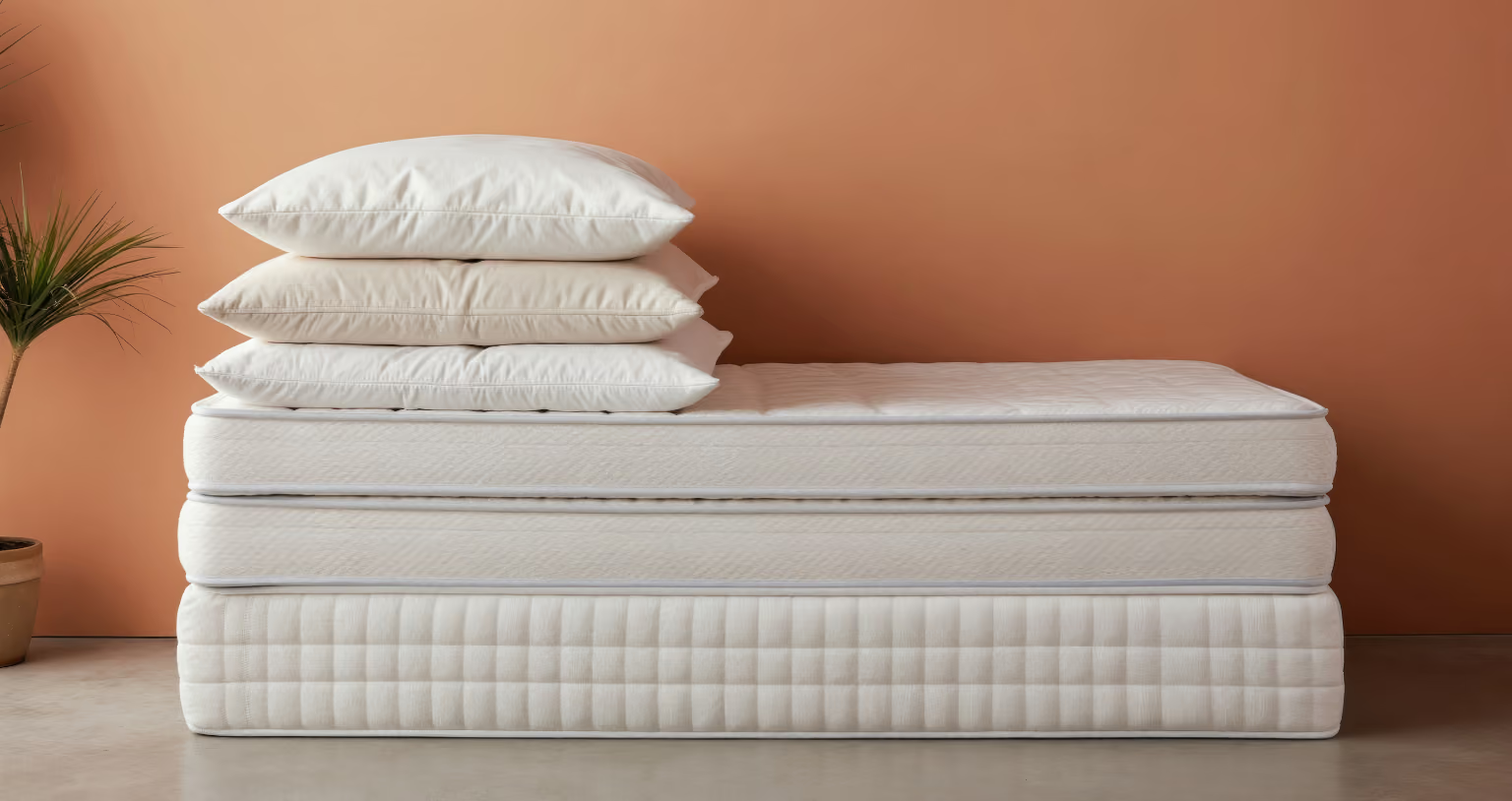
Buying a mattress isn't something to take lightly. After all, you'll need to sleep on it for a while before you can really form an opinion! It's therefore worth taking the time to study different mattresses and their properties in depth, and to compare them. There are many types of mattresses, and each one is different, often with its own particular properties. It's important to understand the basic properties of mattresses in order to be able to compare them.
Different Types of Mattresses: How to Choose the One That Suits You
Choosing a mattress can quickly become complicated given the number of technologies and models available. Memory foam mattresses, pocket spring mattresses, latex mattresses, or foam mattresses: each technology has different characteristics in terms of support, comfort, sleeping independence, or durability.
So, what are the main types of mattresses, and how do you compare them? Find out which criteria to consider in order to identify the model that best matches your needs and sleep habits.
What Are the Different Types of Mattresses?
The technology used is one of the first things to look at when choosing a mattress. The main types of mattresses available include:
- foam mattresses
- memory foam mattresses
- pocket spring mattresses
- latex mattresses
- hybrid mattresses, which combine several technologies
Each type of mattress has its own particular properties. However, technology alone isn't enough to determine whether a given model will suit you. Body type, sleeping position, firmness preferences, and the level of support you're looking for should also be taken into account.
1. Foam Mattresses: Simplicity and Versatility
Foam mattresses cover a range of different technologies and can offer very different feels depending on their composition.
The density, thickness, and structure of the various layers particularly influence the mattress's support and comfort. Two foam mattresses can therefore feel very different, even if they belong to the same broad category.
It's therefore best to compare the specific characteristics of each model rather than choosing based on technology alone.
2. Memory Foam Mattresses: An Enveloping Feel
Memory foam, also known as viscoelastic foam, responds to the body's pressure and heat. It gradually molds to your silhouette and can offer a more enveloping sensation.
This technology can also help limit the transfer of certain movements between the two sides of the bed, a feature that may be of interest to couples.
The feel you get, however, depends on the mattress's overall design: layer thickness, foam density, support structure, and associated materials. A higher density therefore doesn't automatically mean a firmer mattress, or one that will suit every sleeper better.
3. Pocket Spring Mattresses: Support and Sleeping Independence
In a pocket spring mattress, each spring is individually wrapped. The springs can therefore respond more locally to movement and pressure applied to the mattress.
This design can promote sleeping independence and offer dynamic support. It also allows air to circulate through the mattress structure.
The number of springs isn't the only thing to consider, however. Their arrangement, design, and the various layers placed above the springs also contribute to overall comfort.
4. Latex Mattresses: Elasticity and Support
Latex mattresses are generally characterized by good elasticity and a relatively dynamic response to body movement.
Depending on the model, the latex can be natural, synthetic, or a combination of both. The composition and structure of the mattress can therefore significantly affect the sleeping sensation.
As with other technologies, it's important to evaluate the mattress as a whole rather than relying solely on the main material listed in its description.
5. Hybrid Mattresses: Several Technologies in a Single Mattress
A hybrid mattress generally combines several technologies, for example pocket springs with different layers of foam.
The goal is to combine the properties of several materials in a single construction. A model might aim to combine the support of springs with the feel of foam.
The term "hybrid" nonetheless covers very different designs. It's therefore worth looking closely at a model's composition and performance rather than treating the label itself as a guarantee of quality.
How Do You Know Which Type of Mattress to Choose?
There isn't a single best type of mattress for everyone. The right model depends on your needs and preferences.
When comparing several mattresses, the following criteria can be taken into account:
- support and ergonomics
- perceived comfort
- sleeping independence
- durability
- ease of use
- cover design
- temperature regulation
- the conditions offered by each brand, particularly regarding the trial period or warranty
These factors make it possible to look beyond marketing claims and compare the characteristics of each model more precisely.
Why Check Mattress Test Results?
Given the number of models available, a mattress comparison can be a useful starting point for identifying the differences between several products.
Top 5 rankings are built on standardised criteria. For mattresses, the evaluation is based on four weighted categories: Product Offering, Product Features, Awards/Certificates and User Experience.
This methodology makes it possible to compare models using a common framework, rather than relying solely on the features each brand chooses to highlight.
Buy Your Mattress In-Store or Online?
The choice between buying in-store and ordering online mainly depends on individual preference and what each brand offers.
In-store, you can lie down for a few minutes on different models to get a first impression of comfort. Such a short period, however, doesn't always tell you how the mattress will perform day to day.
Some brands sold online offer at-home trial periods. Conditions vary from brand to brand: trial length, return process, warranty, and other conditions should be checked directly with each retailer.
In our rankings, these conditions can be compared across brands where relevant. They are not, however, conditions offered by Top 5, which does not sell the mattresses presented directly.
Compare Mattresses Before Choosing
The type of mattress is a good starting point, but it isn't enough to determine which model will suit you best. Two mattresses using similar technology can offer very different levels of support, comfort, and durability.
Before making your choice, it can therefore be useful to compare models using several common criteria and to check their results across different tests.
Discover the Mattress Comparison
Check the Top 5 rankings to compare the features and results of the different mattresses evaluated according to the site's methodology.
.avif)